

How To Put On Makeup After Cataract Surgery
EyeConnect: eyeCONNECTIONS
December 2009
by J. E. "Jay" McDonald II, M.D.
Physicians debate risk
The apply of makeup is important to many of our patients. I accept noticed it to be one of the get-go questions many patients enquire. Knowing the majority of endophthalmitis cases arise from lid bacteria, makeup usage after surgery is not a modest consideration. You may exist interested to run across how some of your colleagues deal with this consequence and a few other post-op restrictions.
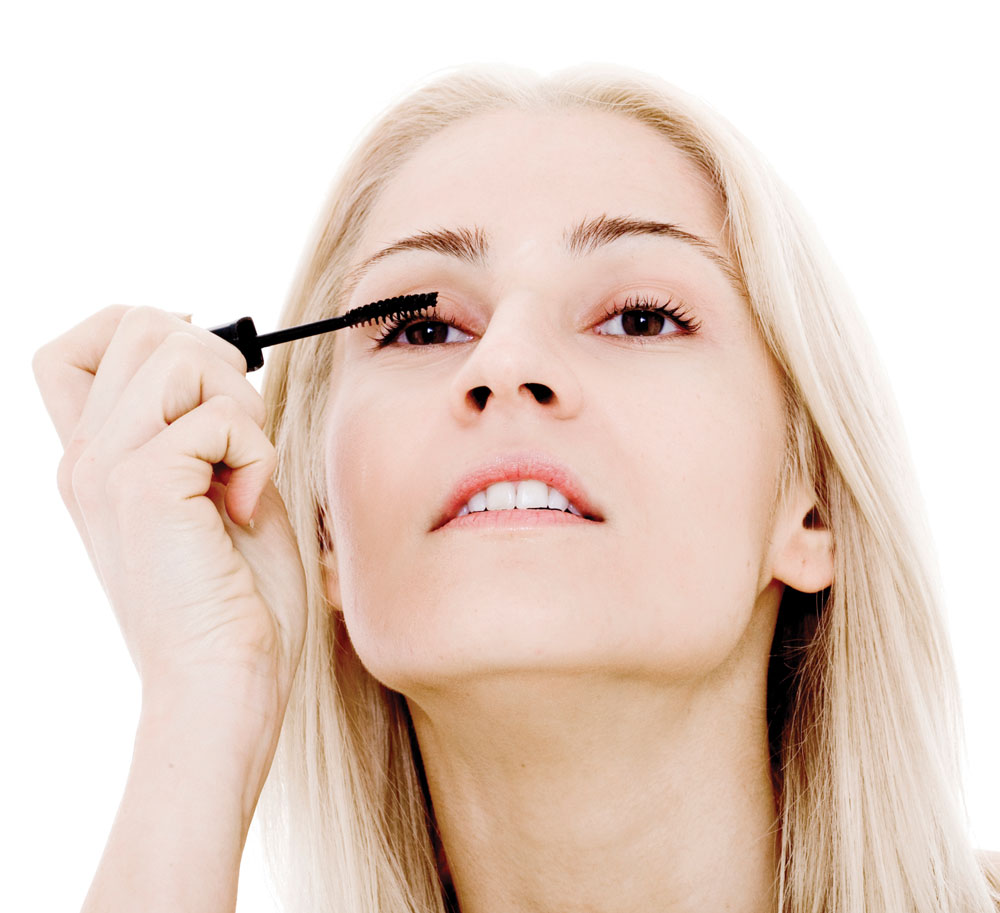
Is in that location any reason to restrict the apply of eye makeup following microincisional cataract surgery? What do the members of this group advise to their patients regarding this? No restrictions? 1 day? I week?
Jeffrey Horn, M.D.
Nashville
I don't know of whatever studies to support this, merely I have them stop when starting pre-op drops. They can resume usage after one calendar week. Why add together to the bacterial load?

Jon-Marc Weston, M.D.
Roseburg, Ore.
I tell the patients no heart makeup for a week post-op. My goal is to reduce the chances of the patient causing some minor irritation or scrape, particularly from mascara or eyeliner, and the resultant worry and telephone call, which takes upwards our time at the office. I suppose if the patient was a news ballast or actress, I would bend the rules.
Michael Kutryb, M.D.
Titusville, Fla.
I place no restrictions any on makeup subsequently the beginning 24-hour interval, but this raises another outcome. Virtually everyone I know places activity restrictions on their patients, especially weight lifting. I tell patients they tin practise anything they want "brusque of bungee jumping," but if I size upward the situation, I tell the men who do lifting at work to non elevator over 40 pounds for a week. Is information technology really necessary to restrict activeness, fifty-fifty lifting 100 pounds, with microincisional surgery? Or are we merely trying to comprehend ourselves with these restrictions?
Mitchell Gossman, M.D.
St. Cloud, Minn.
Forty pounds for one patient may be a slice of cake or an impossible dream. I tell patients every bit long every bit they exercise not shut their mouth and grunt, they may resume activities or weight lifting. They seem to sympathise this, and information technology is the valsalva maneuver with increased IOP that I am concerned about.
J. E. "Jay" McDonald, M.D.
Fayetteville, Ark.
My point is that a properly constructed incision should become stronger with a higher IOP and remain secure (a tautological definition, I empathise that). And then afterwards solar day one, if the incision looks normal, I see little point in restrictions. I have no dubiety that patients generate impressive IOPs transiently with bowel movements, sexual activity, eye rubbing, lifting, and so on. It'due south a miracle that nosotros don't see apartment chambers and entrapped IOLs routinely with all the eye rubbing going on. From what I have seen reentering clear corneal incisions months subsequently, there is little healing going on.
Of class, a restriction of no lifting greater than xl pounds is costless to the surgeon but might be a hindrance to some patients, and needlessly and then.
Mitchell Gossman, Thousand.D.
If my patients receive a monofocal or toric IOL or a ReStor (Alcon, Fort Worth, Texas)/Tecnis (Abbott Medical Optics, AMO, Santa Ana, Calif.), etc., I don't place restrictions on them. I ask them to wear a shield at nighttime for several nights. If they specifically say they lift heavy weights, such as at the gym, I ask them to concord off for a week or so. However, I am much more cautious with those who receive a Crystalens (Bausch & Lomb, Aliso Viejo, Calif.) for fear the lens may vault and stay vaulted. Are others restricting their Crystalens patients more than those who receive other IOLs?
Jeffrey Horn, M.D.
Our patients are instructed to
- Discontinue eye makeup 1 week earlier any middle surgery.
- Apply Clinique Rinse-Off Eye Makeup Solvent ("the i that is a articulate liquid in a blue bottle") to remove information technology initially.
- Follow with daily warm compresses and hat scrubs till day of surgery, using Ocusoft Plus (Cyancon/Ocusoft, Rosenberg, Texis) or SteriLid (Advanced Vision Enquiry, Woburn, Mass.), preferably the cream rather than the private towelettes.
Years ago, Marguerite McDonald (M.D., Rockville Heart, N.Y.) told me that a resident of hers did a projection comparing efficacy of various eye makeup removers and that the Clinique product removed middle makeup more completely than competing products or eyelid scrubs with babe shampoo. I usually point out to patients who balk at stopping centre makeup that they really practice non want makeup particles under the LASIK flap or within the middle. Afterwards surgery, I recommend no eye makeup for 2 weeks, the same interval as for using topical antibiotic and wearing a shield at bedtime. Any nonsurgical patient in whom we find cosmetic debris in the tear film is instructed to be sure that her (it is ordinarily, merely not always, a female patient) mascara does not promise to lengthen or thicken lashes, as products that do so contain fibers that flake off and fall into the tear picture show. Many companies, including Neutrogena and Clinique, offer a "gel mascara." Patients are also cautioned not to use cosmetics, particularly eyeliner, beyond the mucocutaneous junction of the chapeau margin. We tell them, "Utilize to your skin only, not within beyond the lashes." We also recommend that they close their optics when applying loose face powder. Patients generally are pleased to have their persistent strange body awareness cured.
Anita Nevyas-Wallace, M.D.
Bala Cynwyd, Pa.
I apply atropine at the end of surgery, and on day five, if the educatee reacts, I add another driblet. My only restriction is no reading without readers for two weeks. We requite them the readers later surgery.
Ray Oyakawa, G.D.
Torrance Calif.
Contact information
Horn: Jeff.Horn@bestvisionforlife.com
Gossman:mgossman@esppa.com
Nevyas-Wallace: anevyaswallace@comcast.net
Oyakawa: RTOyakawa@svcmd.com
Weston: drw@westoneyecenter.com
About the author

J.E. "Jay" McDonald II, 1000.D., is the EyeMail editor. He is director of McDonald Eye Associates, Fayetteville, Ark. Contact him at 479-521-2555 or mcdonaldje@mcdonaldeye.com
Source: https://www.eyeworld.org/2009/managing-makeup-after-surgery/
Posted by: larkinswerat1964.blogspot.com
0 Response to "How To Put On Makeup After Cataract Surgery"
Post a Comment